If you’ve ever upgraded your exhaust, or just wanted your vehicle to sound better, you’ve likely heard about mufflers and resonators. But what do they actually do? Are they the same thing? And which one should you upgrade, replace, or remove?
This guide breaks down what a muffler is, how it works, the role of a resonator, and how MBRP exhaust systems are designed to deliver the perfect balance of sound and performance.
What Is a Muffler?
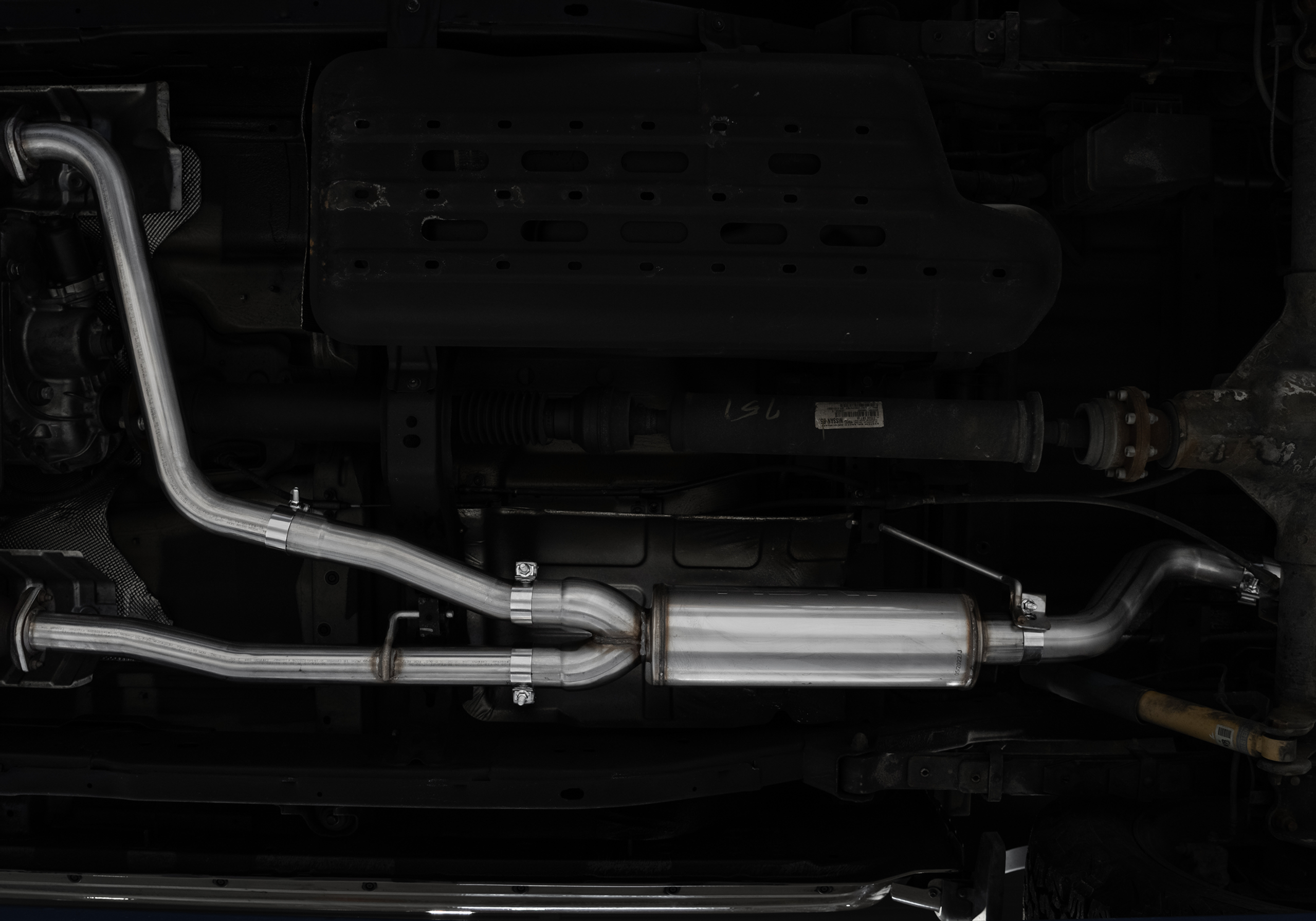
A muffler is a component of your vehicle’s exhaust system that reduces the noise produced by your engine’s exhaust gases.
🔧 Where It’s Located:
Mounted near the rear of the exhaust system, usually just before or at the tailpipes.
🎯 What It Does:
- Absorbs and cancels out sound waves using baffles, chambers, or sound-absorbing materials
- Controls the tone and volume of the exhaust note
- Helps your vehicle meet noise regulations and improve driving comfort
In short, the muffler’s main job is to quiet things down. But in the world of automotive performance, we often want to dial that sound up instead!
What Does a Muffler Do?
Factory mufflers are designed to keep your vehicle as quiet as possible. Performance mufflers, like those from MBRP, are built to let your engine breathe and your exhaust speak up–without going overboard.
Key Features of MBRP Mufflers:
- Straight-through or high-flow designs to reduce restriction
- Tuned internal chambers for a deeper, richer tone
- Mandrel-bent tubing to maintain exhaust velocity
- Available in multiple sound profiles: Tour, Street, Race, and Active
The result? You get a stronger exhaust tone, improved flow, and often a bump in horsepower and throttle response.
What Is a Resonator?
A resonator is often confused with a muffler, but it plays a different role in your exhaust system.
🧩 Where It’s Located:
Typically found before the muffler in the exhaust path.
📣 What It Does:
- Fine-tunes the frequency of the exhaust note
- Reduces or cancels out certain drone-causing sound waves
- Works with the muffler to shape the final tone of your exhaust
Think of the resonator as the sound editor, while the muffler is the volume control.
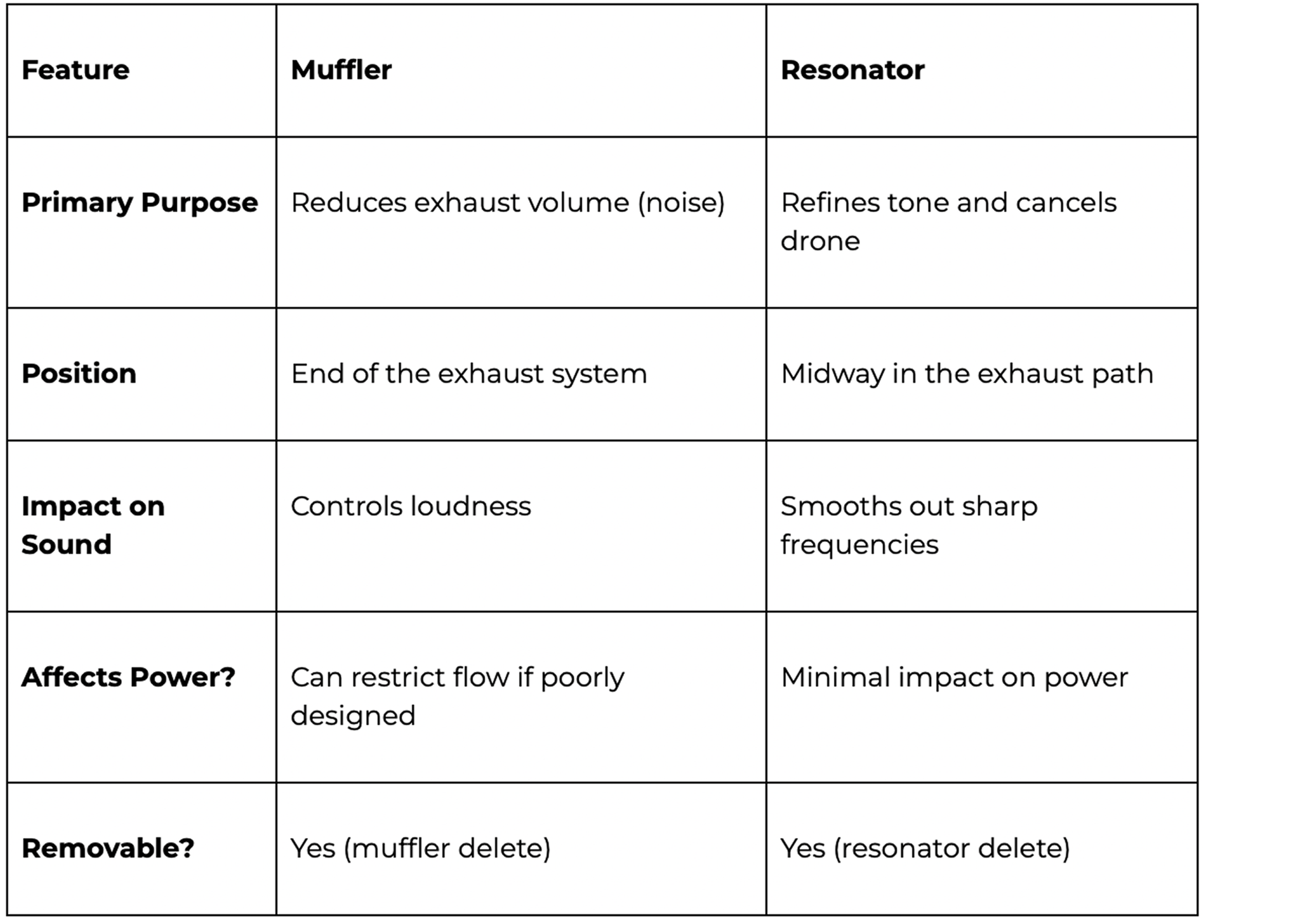
Muffler vs. Resonator: What’s the Difference?
Here’s a quick side-by-side comparison:
Should You Delete the Muffler or Resonator?
Removing either component will make your vehicle louder, but the results vary:
- 🔊 Muffler Delete:
- Drastically increases volume
- Creates a raw, aggressive tone
- Popular on muscle cars and trucks
- 🎵 Resonator Delete:
- Slight volume increase
- Sharper, raspier tone
- May cause drone if muffler can’t handle it alone
- Common on tuner builds
MBRP offers exhaust systems with and without resonators, so you can choose the tone that best fits your ride. Some kits, like the Race Profile, are muffler-free for maximum volume–while others use performance-tuned mufflers to strike the perfect tone.
Why MBRP Mufflers Are Different
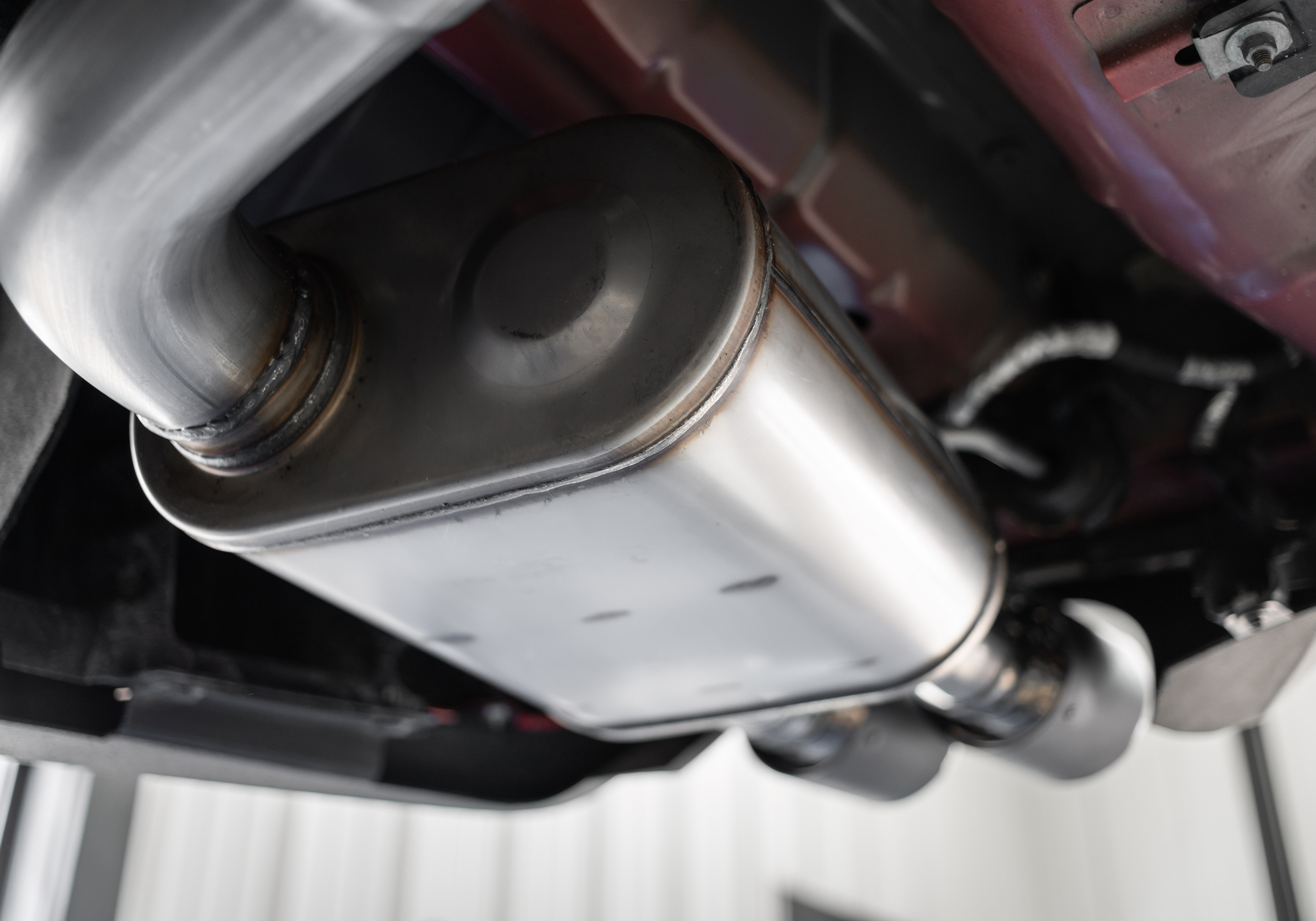
Every MBRP exhaust system is engineered with a vehicle-specific sound signature in mind. That means the mufflers (and resonators, if included) are precision-tuned for flow, tone, and drivability.
Benefits of MBRP Mufflers:
- ✅ Dyno-tested for performance
- ✅ Built from T304 or T409 stainless steel
- ✅ Welded for durability in extreme conditions
- ✅ No drone options available for long-haul comfort
- ✅ Aggressive options available for weekend warriors and racers
Whether you want a mellow rumble or a full-throttle roar, MBRP has a muffler design that delivers the sound without compromising performance.
Final Thoughts
Mufflers and resonators both play key roles in shaping your vehicle’s exhaust sound, but they serve different purposes. If you want more volume, better tone, and real performance gains, upgrading to an MBRP exhaust system with a high-flow muffler is a smart move.
From refined daily-driver setups to race-ready systems with no muffler at all, MBRP gives you the power to customize your exhaust exactly how you want it.
Related articles
The Science Behind TORQ Technology
We built TORQ Technology. We designed this one-of-a-kind system to do one specific job: kill the drone without killing the volume.


Is a Stainless Steel Exhaust Worth It? Here’s Why It Outperforms the Rest
Is a stainless steel exhaust the right choice? Discover its benefits for performance, corrosion resistance, and lasting style in this complete breakdown.